
When the Text Chooses You
A gentle defense of lectionary preaching.

There are few moments more sacred—and more daunting—than the pastor standing before an open Bible, praying, Lord, what do you want your people to hear this week? In that moment, the full weight of proclamation rests on discernment. Should one continue a series on Romans, respond to cultural events, or follow an emerging sense of spiritual need within the congregation? Many preachers choose an open canvas method: topical series, expository explorations, or thematic cycles such as “The Fruit of the Spirit” or “Jesus and His Parables.” These practices have noble histories and real pastoral value. They allow extended engagement with central doctrines and create space for creative sermon planning. A topical series, for example, helps address congregational wounds or moral confusion with intentional depth; an expository series encourages faithfulness to a biblical book’s narrative flow. Such approaches deserve affirmation. They reflect the preacher’s love for both text and context.
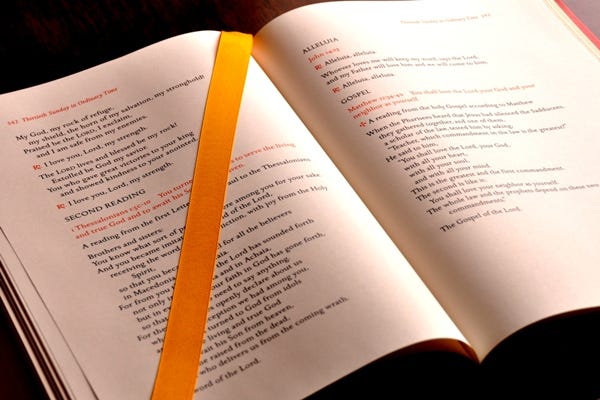
And yet, there is something altogether different—something rhythmically sacred—about preaching within the lectionary. It is not a superior method but a different mode of hearing. The lectionary arranges Scripture according to the Church’s seasons, aligning the pulpit with the pattern of the Christian year. On any given Sunday, the preacher does not select a text so much as receive one. This act of reception is a form of ecclesial humility. Instead of saying, “What would I like to preach?” the pastor asks, “What is the Spirit inviting us to hear with the whole Church today?” That singular shift—from choosing to receiving—transforms the preacher’s posture from control to communion.
A Shared Hearing Across Time and Tradition
The beauty of the lectionary lies in its connectedness. On the Second Sunday of Lent, an Anglican parish in Kenya, a Lutheran congregation in Minnesota, and a Roman Catholic cathedral in Poland all encounter the same Gospel text—perhaps the story of Nicodemus or the journey up the Mount of Transfiguration. Each hears it in its local tongue, surrounded by their own liturgical colors and cultural cadence, but the scripture itself is the same. This is no small mystery: the Spirit moves through common readings to knit together a global Church. The preacher who steps into the pulpit on Sunday morning thus does so not alone, but alongside countless others wrestling with the same text, asking similar questions, seeking divine illumination for diverse peoples.
That shared rhythm offers more than sentimental unity. It reinforces the truth that our faith is not isolated or provincial. The lectionary embodies catholicity—the universality of the Christian life amidst a panorama of traditions. We stand inside a symphony rather than a solo. Even small congregations in rural communities find themselves part of something transnational and transcendent. In an age when many Christians feel fragmented by politics, denomination, and digital echo chambers, preaching the lectionary is a quiet act of resistance against disunity. It says: we are listening together.
